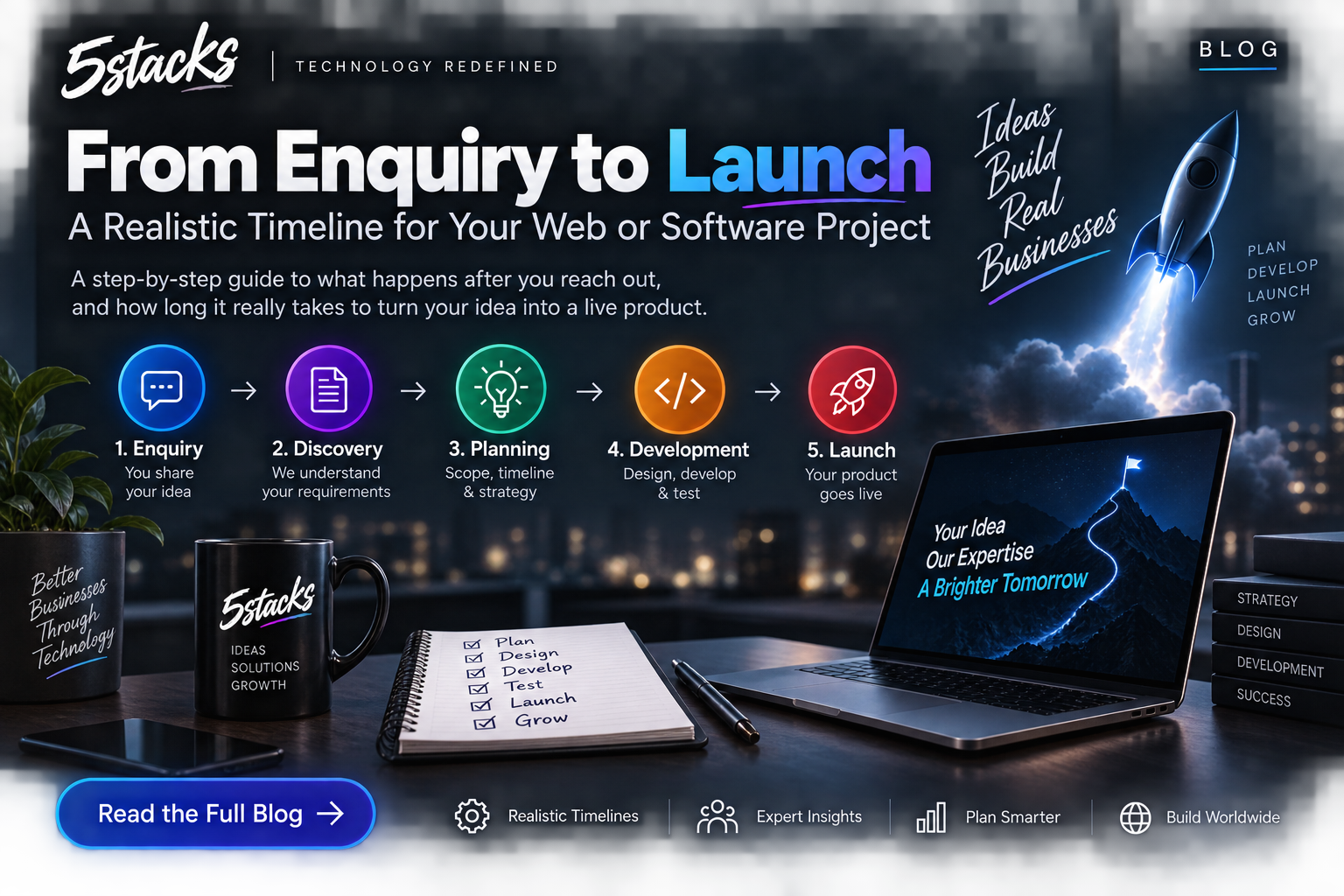
From Enquiry to Launch: A Realistic Timeline for Web and Software Projects
“How long will it take?” depends on scope and decisions. Visual timelines for In...


In the fiercely competitive digital landscape, where every SaaS company vies for attention, merely having a great product isn't enough. You need to be seen, understood, and trusted. For years, content marketing has been the bedrock of organic growth, but the rules are evolving at lightning speed. As we approach 2026, a new, more sophisticated approach is not just a competitive edge, but a necessity: AI-driven content clusters for SaaS growth.
This isn't about automating every blog post (though AI certainly plays a role there). It's about a strategic, data-informed methodology to build unparalleled topical authority, dominate search engine results pages (SERPs), and convert curious visitors into loyal customers. For SaaS founders, developers, and business owners in India and globally, understanding and implementing this strategy will define the winners of tomorrow.
Gone are the days of stuffing keywords and writing disjointed blog posts in the hope of ranking. Google's algorithms, powered by advanced AI and machine learning, have become incredibly adept at understanding user intent and topic depth. They no longer just look for keywords; they look for comprehensive answers and authoritative sources.
Google's shift towards semantic search means it interprets queries based on context, intent, and the relationships between words. This is a game-changer. Instead of optimizing for a single keyword like "best CRM software," you must demonstrate authority on the entire topic of "CRM software," covering its types, benefits, implementation, comparisons, and more. This holistic understanding is precisely what content clusters aim to achieve.
Many SaaS companies operate with a blog filled with individual posts, each targeting a specific long-tail keyword. While this can yield some results, it often leads to:
Topical authority is your brand's recognized expertise on a broad subject area. When Google perceives you as the go-to source for everything related to your SaaS niche (e.g., project management software, cloud security, marketing automation), it rewards you with higher rankings, more organic traffic, and increased visibility. Content clusters are the most effective structural method to build and demonstrate this authority, especially when enhanced by AI.
A content cluster strategy organizes your website's content around a central, broad topic (a "pillar page") and supports it with several interlinked, more specific articles ( "cluster content"). The "AI-driven" aspect introduces intelligence and efficiency into every stage of this process, making it incredibly powerful for SaaS growth.
A pillar page is a comprehensive, evergreen piece of content that covers a broad subject area in depth. It's not just an overview; it's a definitive guide. For a SaaS company offering project management software, a pillar page might be "The Ultimate Guide to Project Management Methodologies." It would briefly introduce various methodologies (Agile, Scrum, Waterfall), provide a high-level comparison, and then link out to more detailed articles (cluster content) for each specific methodology.
These are individual blog posts or articles that dive deep into specific sub-topics mentioned in your pillar page. Each piece of cluster content extensively covers a narrow aspect of the broader pillar topic. Using the project management example, cluster content might include articles like "Understanding Agile Project Management," "Implementing Scrum in Your Team," or "Waterfall vs. Agile: Which is Right for You?"
Strategic internal linking is paramount. Your pillar page links to all relevant cluster content, and in turn, each piece of cluster content links back to the pillar page, and often to other related cluster articles. This creates a robust, interconnected web of content that signals to search engines the depth and breadth of your expertise on a given topic, distributing "link equity" and improving crawlability.
This is where the "AI-driven" element truly shines, elevating a good strategy to a great one. AI tools significantly enhance the efficiency, accuracy, and scalability of content cluster implementation:
Implementing an AI-driven content cluster strategy requires careful planning and execution. Here’s a step-by-step guide for SaaS companies:
Start by identifying the main product categories or problem areas your SaaS solution addresses. These will be your foundational pillar topics. Think broad, overarching themes that your target audience searches for. For a CRM, pillars might be "Customer Relationship Management," "Sales Automation," or "Marketing Campaigns."
Use AI-powered SEO tools to:
Create your pillar pages first. These should be 3,000+ word, highly authoritative guides that offer immense value. They should introduce the broad topic, provide an overview of key sub-topics, and be structured with clear headings and a table of contents for easy navigation. Remember to link out to your nascent cluster content (even if it's just a placeholder for now).
This is where AI truly accelerates your content creation. Use AI writing assistants to:
Crucial: Always have human editors review, fact-check, and refine AI-generated content to ensure accuracy, brand voice consistency, and a truly human touch. The goal is augmentation, not replacement.
As you publish your cluster content, meticulously link:
Use descriptive anchor text that clearly indicates the linked content's topic. This strengthens the SEO value of your AI-driven content clusters for SaaS growth.
The work doesn't stop after publishing. Use AI-powered analytics platforms to:
Implementing an AI-driven content cluster strategy offers a cascade of benefits specifically tailored for SaaS growth:
By establishing deep topical authority, your website becomes more relevant to a wider range of search queries. This leads to higher rankings across numerous related keywords, driving significantly more organic traffic to your SaaS platform.
You'll position your SaaS brand as the definitive expert in your niche. This builds trust with both users and search engines, creating a powerful moat against competitors.
More relevant traffic means more qualified leads. When users find comprehensive, helpful content addressing their needs, they are more likely to perceive your SaaS as a credible solution and move further down the sales funnel. The comprehensive nature of AI-driven content clusters for SaaS growth ensures users find answers at every stage of their journey.
Google's continuous evolution favors topical depth and user intent. A cluster strategy aligns perfectly with these trends, making your SEO efforts resilient to future algorithm updates.
While requiring upfront planning, AI assistance streamlines the content creation process. It allows you to produce high volumes of high-quality content more efficiently, maximizing your marketing ROI.
Pillar Page: "The Complete Guide to Modern Project Management" Cluster Content: "Agile Project Management Explained," "Scrum Methodologies for Tech Teams," "Choosing the Best Project Management Software Features," "Gantt Charts vs. Kanban Boards," "Project Management KPIs and Metrics." AI's Role: Identifying all potential long-tail queries around project management, suggesting keyword variations, drafting outlines and content for cluster articles, analyzing user engagement to identify content gaps.
Pillar Page: "Understanding Cloud Security for Businesses" Cluster Content: "Data Encryption Best Practices in the Cloud," "Compliance Standards for Cloud Security (e.g., GDPR, ISO 27001)," "Threat Detection and Response in Cloud Environments," "Multi-Factor Authentication for SaaS Security," "Choosing a Cloud Security Provider." AI's Role: Discovering emerging threats, compliance changes, generating security policy templates, personalizing content for different industries within cybersecurity, and identifying authoritative sources for referencing.
While highly effective, implementing AI-driven content clusters isn't without its nuances.
The biggest challenge is maintaining high quality and avoiding generic, repetitive content. Always use AI as a co-pilot, not an autopilot. Rigorous human editing, fact-checking, and refinement are non-negotiable to ensure accuracy, originality, and value.
SaaS content needs to be authoritative yet approachable. AI might struggle with nuanced brand voice, empathy, and creative storytelling. Inject your unique brand personality through human editing to ensure your content resonates with your audience and builds genuine connection.
Beyond content, ensure your website's technical SEO supports your cluster strategy. This includes optimizing page speed, mobile-friendliness, using proper schema markup for rich snippets, and ensuring a clean URL structure. Your internal linking needs to be logical and crawlable. For expert guidance on technical SEO or content strategy, explore how 5Stacks' services can elevate your digital presence.
The future of SEO for SaaS companies is built on authority, relevance, and comprehensive content. AI-driven content clusters provide the strategic framework and the technological acceleration needed to achieve these goals. By embracing this approach, you're not just chasing rankings; you're building a sustainable foundation for long-term growth, establishing your brand as an undisputed leader in your niche, and directly impacting your bottom line.
Don't let your competitors get ahead. Start planning your AI-driven content cluster strategy today. For more insights into cutting-edge SEO and content strategies, visit the 5Stacks blog. If you're ready to transform your SaaS SEO and unlock unparalleled growth, explore how 5Stacks.in can partner with you to implement these advanced strategies. We also recommend reading our post on The Future of SEO: AI's Role in Content Creation for a deeper dive into AI's broader impact on search.
Is AI-generated content penalized by Google?
How long does it take to see results from AI-driven content clusters for SaaS growth?
What's the minimum content volume for a successful cluster?
Can small SaaS startups implement this strategy effectively?