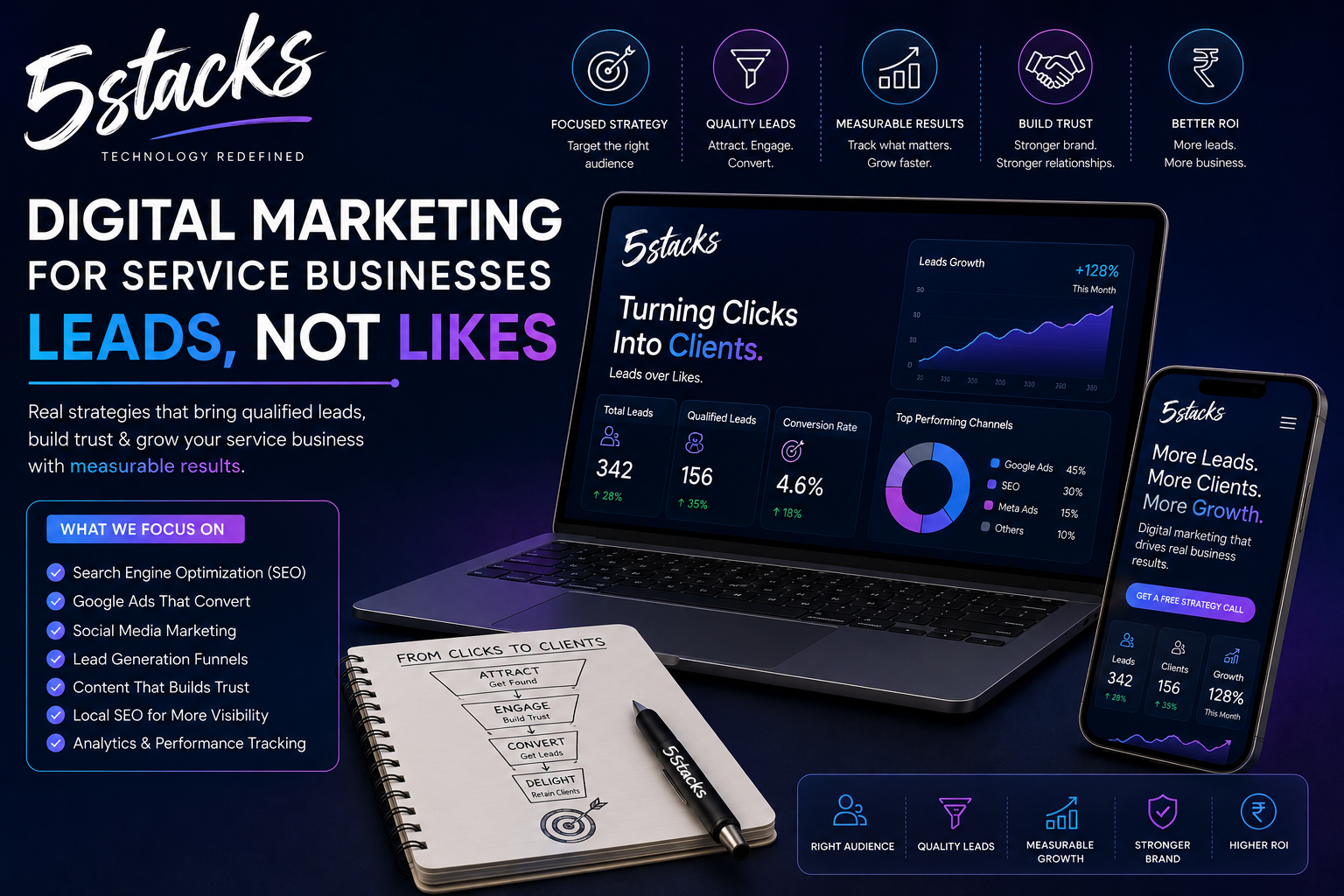
Digital Marketing for Service Businesses: Leads, Not Likes
Service businesses do not need vanity metrics. Learn how to buy conversations wi...

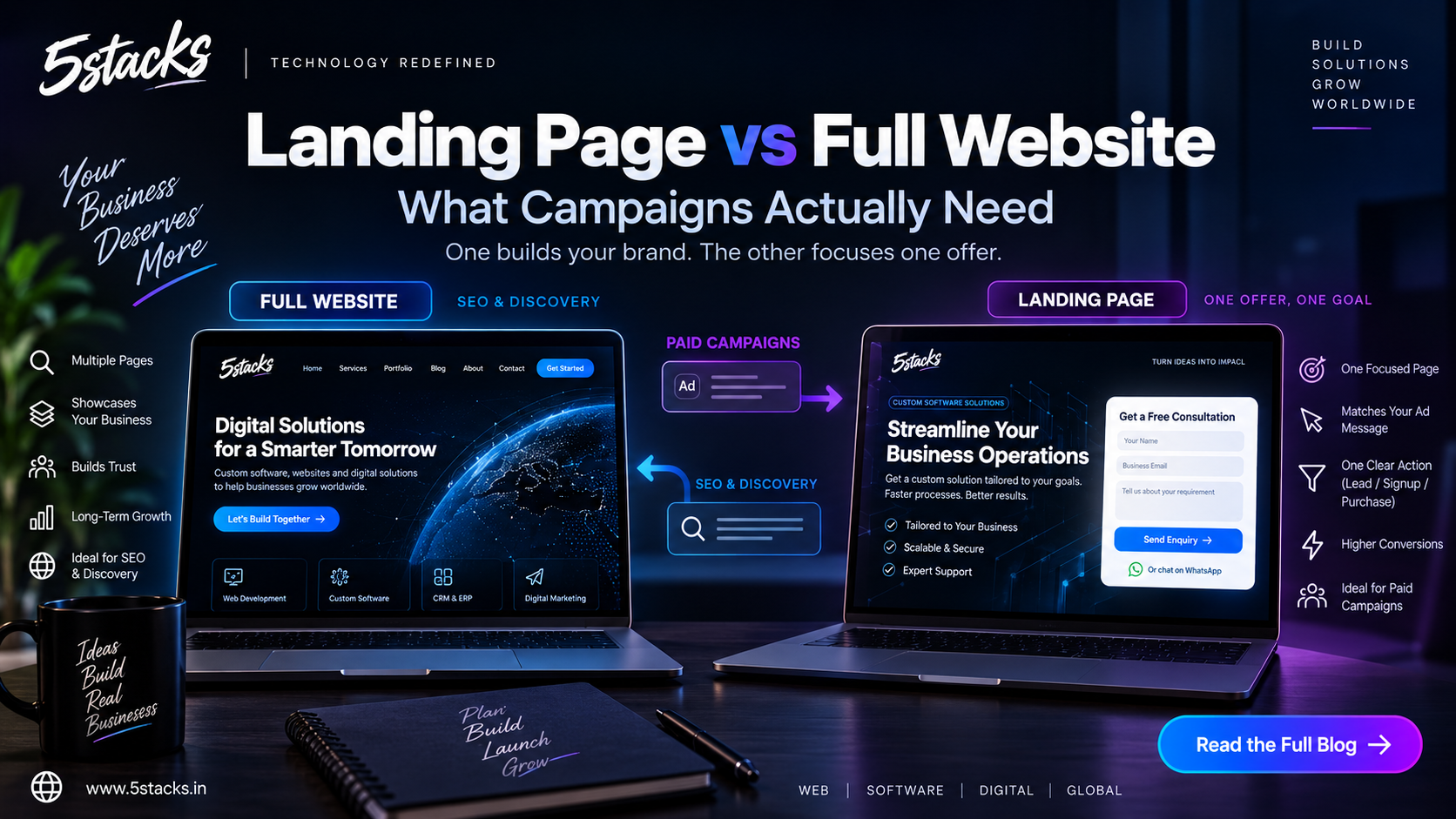
Paid traffic on a cluttered homepage is how budgets disappear. The homepage has five jobs. An ad has one. That mismatch is why we often build a dedicated landing page next to the main website — then wire it to campaigns.
Use this before Google/Meta ads, a webinar, or a festival offer.
| Full website | Landing page | |
|---|---|---|
| Job | Orient, prove, rank, all services | One offer, one action |
| Nav | Full menu | Minimal — often no extra links |
| SEO | Many URLs, clusters | Index or noindex on purpose |
| Lifespan | Years | Weeks to a quarter, or evergreen offer |
If you are paying per click, the first screen must complete the sentence the ad started. Anything else is a leak. More on pipeline: leads, not likes.
A weak site plus a landing still underperforms. Conversion basics first, then landings for paid tests.
Headline = ad claim. Same words if you can.
One case or real context — not a fake counter.
Who it’s for, what they get, what happens next.
Short form or WhatsApp. Two FAQs. No extra CTAs.
Keep brand so it does not feel like a different company — trust checklist — but simpler than Home. Logo + privacy in the footer is enough nav for many paid pages.
If sales cannot name the source, you will argue about “lead quality” forever.
Evergreen landings that match a real query can be indexed. Festival pages should be noindex when they expire, or redirected. Do not let dead offer URLs cannibalise service pages.
Paying for clicks + specific offer → landing page.
Organic + multi-service story → full site (and good service URLs).
Scope, price band, form. Not “digital solutions.”
Date, who it’s for, calendar or WhatsApp.
Agency-only offer. Separate from public Home.
Many companies need both: a durable site plus 1–2 landings per live campaign. Ask 5Stacks to wire the page and tracking before spend starts.
Can the landing page be a section on the homepage?
Should landing pages have a menu?
WordPress landing plugins vs custom?
How many landing pages is too many?
Do landing pages replace SEO?
What is a good conversion rate?
Should we use the same landing for Google and Meta?