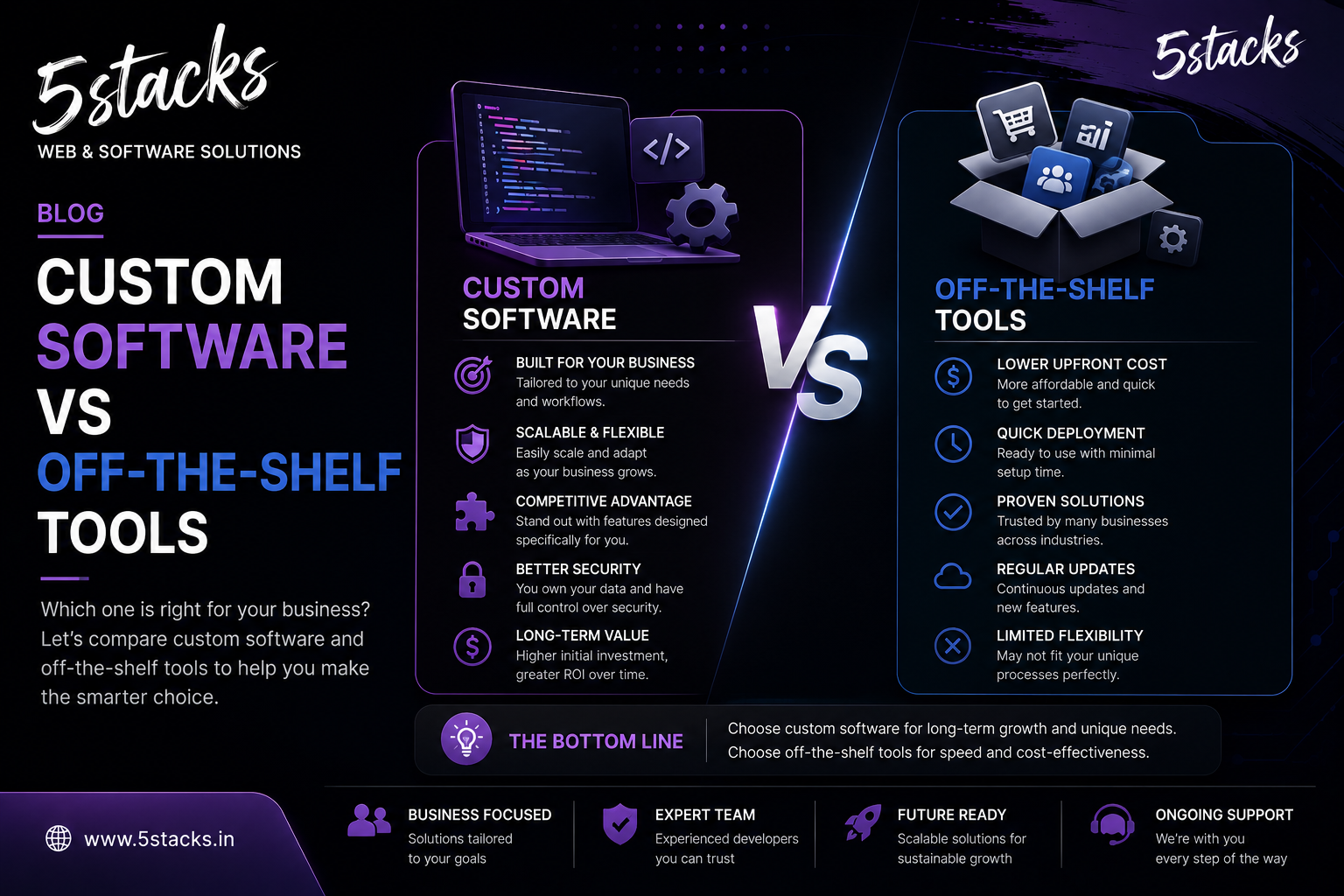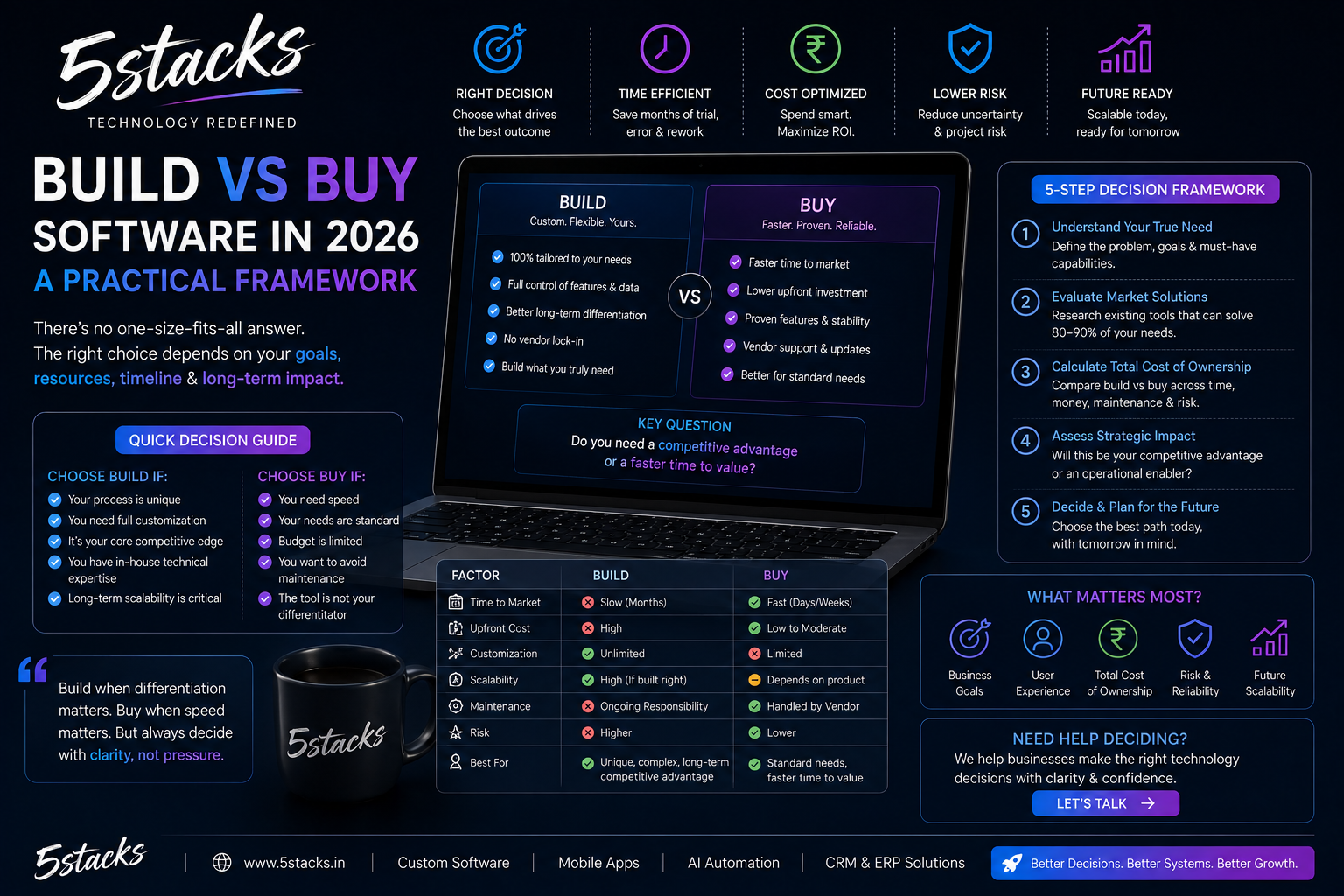
Build vs Buy Software in 2026: A Practical Framework for Founders
Build vs buy is not ideology. Use this framework to decide when SaaS is enough a...
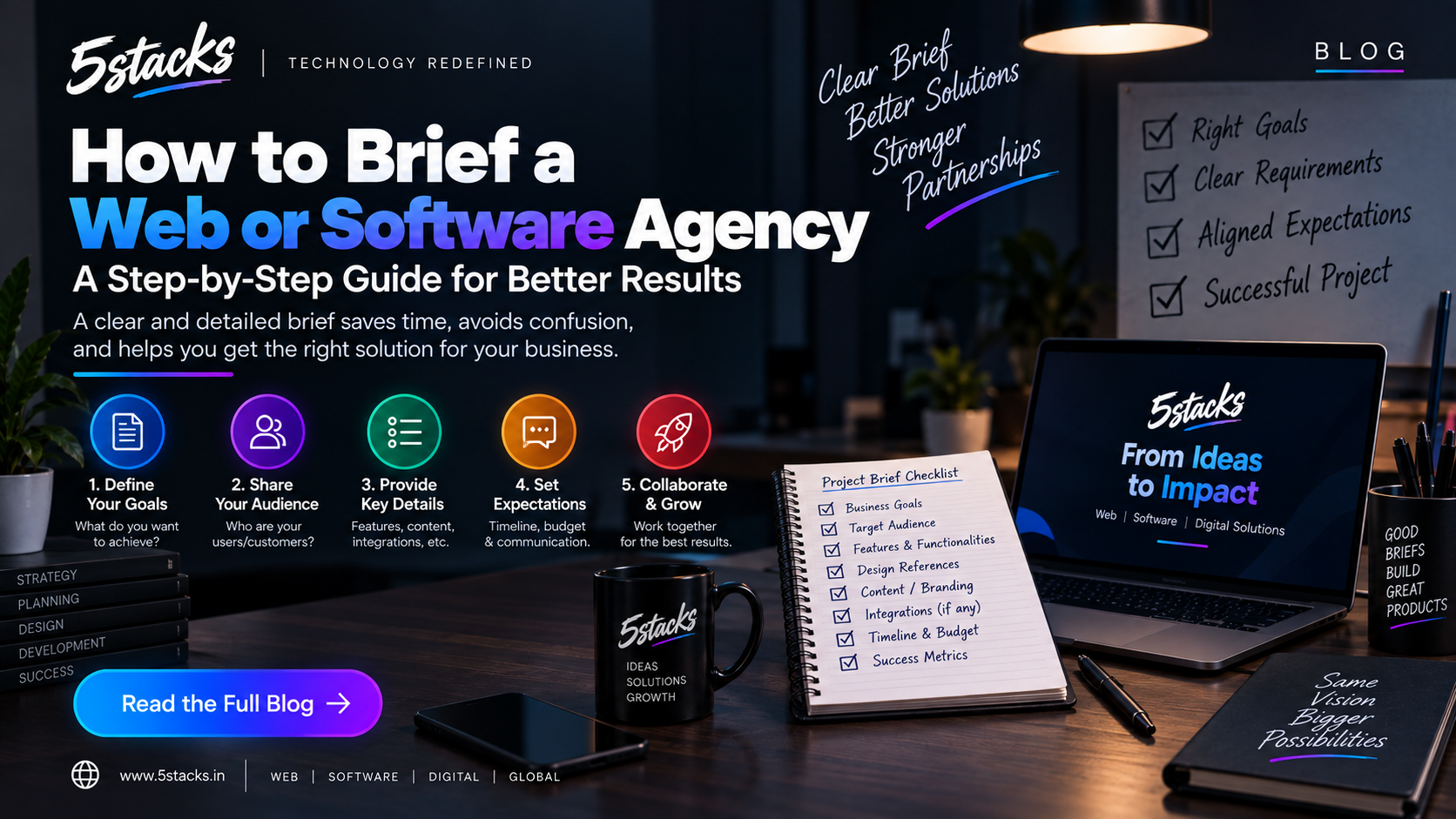
A pretty moodboard does not save a vague project. Most delays we see on websites and custom software start the same way: “We need something modern” with no users, no workflow, and no definition of done.
This guide is for founders and ops leads in India who will hire an agency (or already have). It is the brief we wish every first call included — plus the visuals your team can screenshot into a Google Doc.
Agencies guess when the brief is slogans. Guessing looks like progress in week one and rework in week eight. Typical failure modes:
A brief is not a brand poem. It is a decision document: who, what, v1 vs later, and how you will know it worked.
If you cannot fill the green column in 20 minutes, fund a discovery workshop — do not send five agencies a slogan PDF.
| Section | Answer in one paragraph | Example |
|---|---|---|
| Context | What you do, who buys, where you operate | Electrical consultancy, Gujarat + UAE clients |
| Problem | Time, errors, or lost leads today | Quotes live in WhatsApp; no audit trail |
| Users | Roles, devices, language | 8 sales on mid-range Android; Gujarati + English |
| Scope v1 | Must ship first vs explicitly later | Lead + quote; not inventory |
| Success | 90-day proof | Form + CRM; 3 case studies live |
| Constraints | Money, date, tools you must keep | Keep Tally; Diwali week freeze |
Empty rows are the workshop agenda — not a reason to skip the brief.
Copy this into a doc before RFPs. Ten numbered lines beat ten pages of adjectives.
Company, city, industry, size. Project type: site / CRM / app / mix.
One primary user. Current workaround: Excel, WhatsApp, old site, none.
Five must-haves. Five explicit cuts. Integrations: yes / no / unknown.
Attach 3 URLs you respect — and one you do not want to look like.
For software, walk one real job: lead → quote → order, or visit → ticket → parts. For a website, walk the buyer: Google → service page → contact. If you cannot walk it, start with process mapping — see CRM/ERP and build vs buy.
“Done” is not “looks nice.” Write acceptance like this:
Give a band, not theatre. “₹X–Y for v1, later modules extra” beats “as cheap as possible.” Name hard dates (festival, audit, board). Name immovables: domain, ERP, bilingual copy, GST invoices.
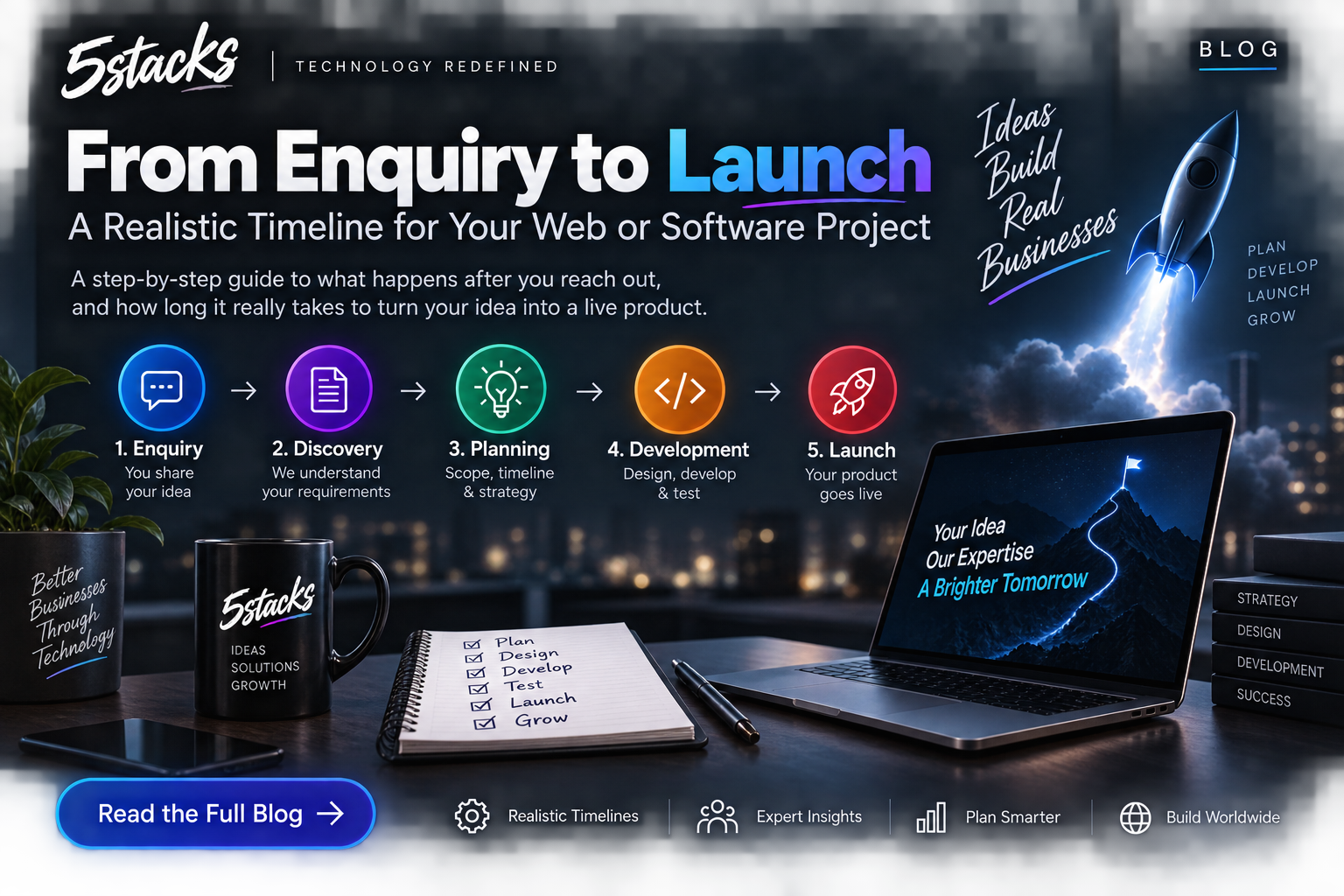
If budget is tight, ask what to cut first: motion, extra language, second mobile OS. See a realistic calendar in enquiry to launch.
A messy Drive folder beats waiting for “perfect guidelines.”
Users, v1, constraints. List open questions.
Phased v1 vs later. Honest “don’t build yet” if needed.
Only after a human can say yes in 48 hours.
Walk away from quotes that ignore your v1 list, promise a full ERP in a month, or refuse to name a lead. A good reply restates users, flags missing data, and phases price. Forty stock screenshots is not a proposal.
On your side: five directors “just giving a little feedback” kills the brief. One approver.
Have a draft? Send it to 5Stacks — we will tell you what is missing before anyone designs a pixel.
How long should a brief be?
Should we send the same brief to five agencies?
What if we don’t know the workflow yet?
Do we need wireframes before hiring?
Who should write the brief?
Can we change scope later?
What is the fastest way to stall a project?